
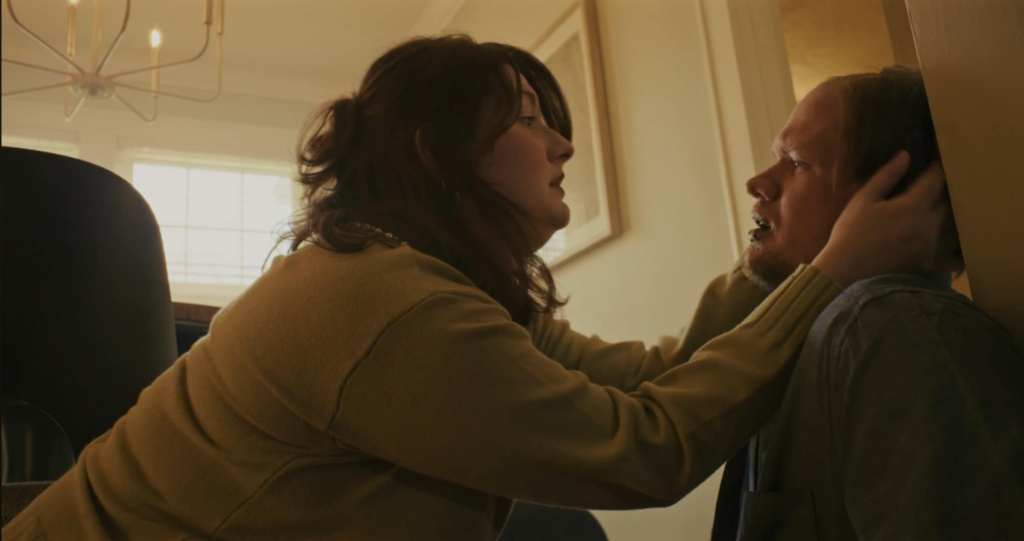
This piece contains frank discussion regarding mental health including suicidal ideation.
Please proceed with caution and care.
When writing “Your Husband Was a Good Man,” the idea of performative okayness and how that rampantly affects our society on micro and macro levels was baked into the narrative. It’s a phenomenon that I find interesting, sad, and disturbing as a human and a writer. There comes a time in life when you put the projection of seeming okay before the actual state of you actually being okay. We have somehow come to moralize the art of not worrying people, even when people maybe should be worried about you. No one gets a gold sticker for pretending not to be hurt or livid or struggling or human, but society will reward you in the sense of placation and lies, creating a weird ouroboros so to speak. The more positive reinforcement you get, the more you will perform for your audience. You want the reassurance that you are doing fine even when you’re clearly not. Society doesn’t want to sit in your discomfort or mine or their own or anyone’s. We’ve become a society of people who want a veneer of functionality and comfort without actually doing the work to attain it. I’ll be the first to tell you I’m a hypocrite when it comes to this bizarre societal conundrum.
The human need for comfort often comes at the denial of self, and buddy, and I was stuck in the middle of it in the worst way. In the fall of 2023, I was in a desperate situation that I am still working through in therapy when I wrote “Your Husband Was a Good Man” and thoroughly clinging to the idea that I needed to project okayness so that I would magically become okay. I was writing a literal work exploring why playacting stability and happiness was not a solution to grief, discomfort, and pain all the while I was doing just that. In those moments, I wanted to show the world I was overcoming every little obstacle thrown at me even when I had lived through something devastating that nearly killed me only weeks before writing the short and finalizing a version of it for screenplay competitions. I went from writing a suicide note to writing a screenplay based on an idea I’d had in the spring of that year. I wanted to shove that baby out in the world as a shining beacon of just how okay I was: “Look! I’m writing! I’m achieving! Reinforce my bad self-denying behavior so that cycle can continue!”
Did it work? Absolutely not. It never does. I did, however, come to the insight that we will perform our lives for other people who will then clap for us as we descend into an untimely grave. The point is: performative okayness is killing us all. It’s all rooted in the sick need to comfort everyone else who finds discomfort in our personal predicaments and tragedies. We don’t want to worry people. We don’t want to make people too sad with the sad thing that happened. We don’t want those who wish to see us fall know we’re struggling. We don’t want to feed schadenfreude nor do we want people to grow preoccupied with concern about us. The reasons go on and on and on, and it is as personal and different as snowflakes or fingerprints or whatever other cliche exists out in the ether for the nature of uniqueness.
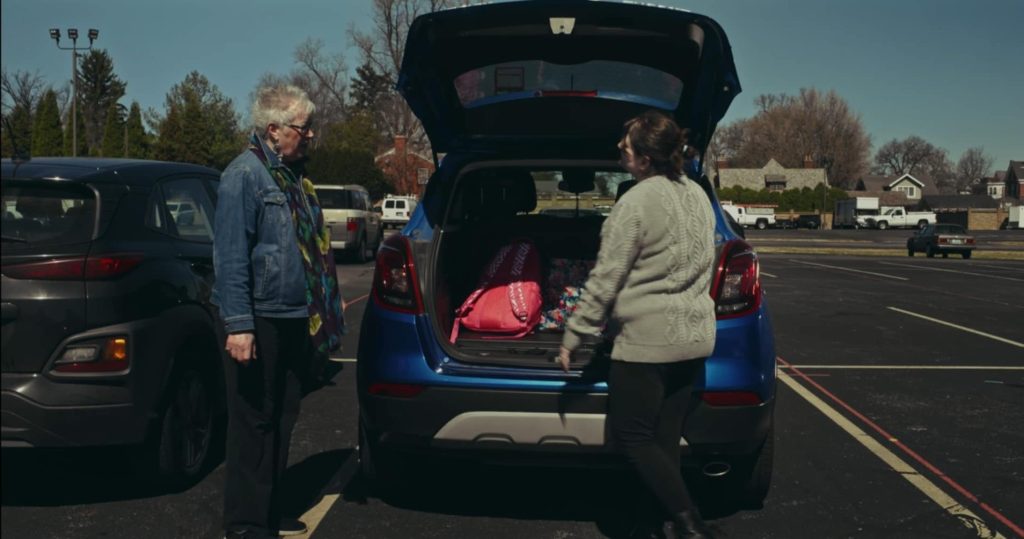
Performing okayness is fancy self-abandonment, a dolled up version of masking both neurotypical and neurodivergent people participate in, that puts others first in times when we need to be prioritizing ourselves. All of this is the people pleaser’s inherent curse morphed into something far more sinister. The parking lot scene in “Your Husband Was a Good Man” is special to me, not only because Roxye is played by my beloved drama professor and mentor Belinda Thomson but also because it functions as a rejection of performative okayness. Orla’s brash. She’s rude. She’s exhausted. And you know what? She has every right to be. She’s over having to smile and comfort others over the fact her husband died. She’s tired of the platitudes and the sentiments that are hollow and more about the person saying them than they are about her. The facade of false support comes crumbling down when Roxye is faced with Orla wholesale rejecting her politeness politics hiding deep perturbation bullshit. The scene itself is uncomfortable. It’s designed to be. It’s awkward, confrontational, and harsh, peeling back the layers of performance and allowing someone who is not okay to publicly be simply that—not okay.
Now, I do zigzag the ideas of okayness in “Your Husband Was a Good Man” because Orla falls back into some darker patterns when Will is resurrected. Her one moment of freedom gives way to a long line of denial—scrambling endlessly to make a dire situation better. In the end, the answer is not simple because it never is. She can’t keep telling herself she can fix it all, and she can’t keep forgoing Will’s own discomfort with his current existence for the sake of her own nebulous idea of okayness. We can become so enmired in our own pain and the act of regaining equilibrium that it exacerbates the problem altogether. Human beings are infuriating in that way. Orla definitely is. I think that she’s one of my most difficult characters because it’s a challenge to actually like her yet the viewer is still invited to empathize with her tragedy and see it from the inside out. Imperfect people deserve stories. too. Remember that. Complexity comes at a cost, and in the search for comfortability and general okayness we often flatten our nuance to make our plights digestible for others and sometimes ourselves.
Looking back now, I think that parking lot scene was a weird form of wish fulfillment for me at the time, the luxury of not being okay and not feeling like I had to hide it behind tense smiles and saccharine placation. How freeing it would have been to have completely and definitively told the whole world to fuck off and own my personal discomfort, heartbreak, and melancholia. However, I was tamping it down and then going on to make a short film to distract myself from my disturbed inner state. Denial helps but only for a while before starting to fester and deteriorate. The problem is still there, but now, it’s become whatever vegetable that’s turning to goo in the back of your fridge and creating a bigger mess than it was originally. I burned out emotionally, something I am still attempting to recover from, but I think that striving to give myself permission to not be okay has lessened the burden. Let people be worried about you. You yourself—if you have a soul, empathy, and loved ones—worry about others. Why not allow the community to hold you in your pain instead of making moves to seek validation for whatever quick fix you’re forcing on yourself and the masses?
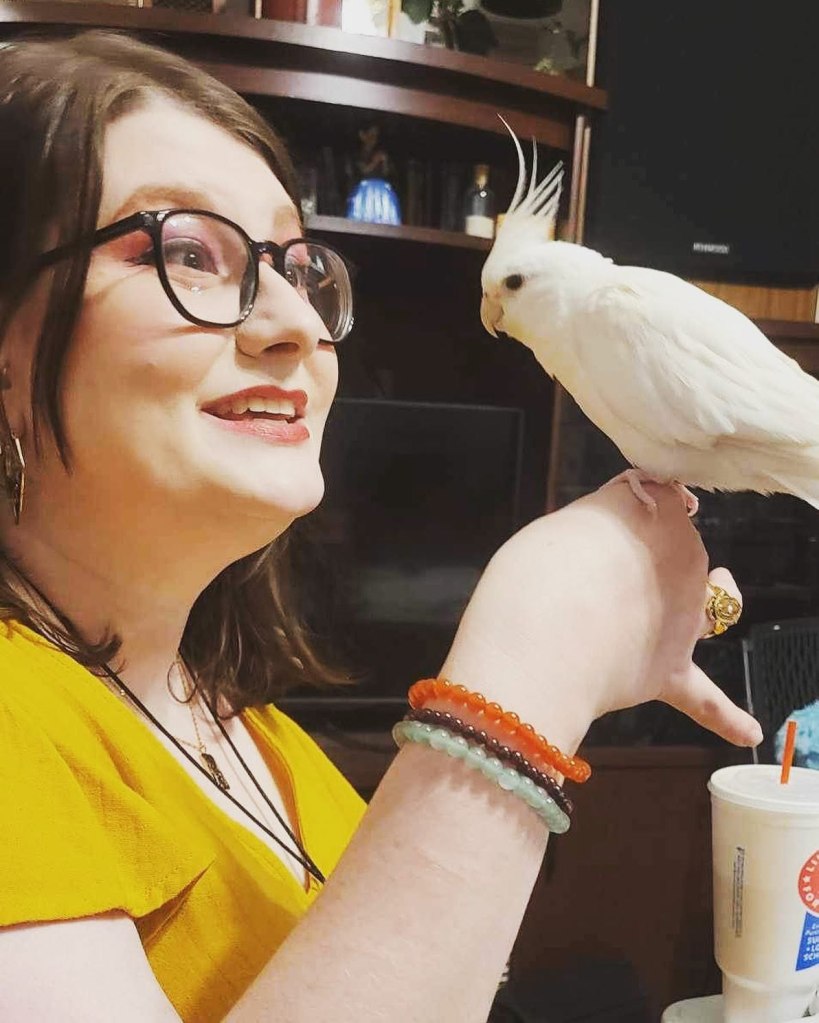
A moment of genuine bliss circa late September 2023 when I was, in fact, not performing okayness for social media.
Candid photo captured by Emily Fabrizio.
Meanwhile this absolutely ghoulish selfie where I don’t recognize myself and look both exhausted and also checked out is a perfect example of my quest to perform okayness. The lights are on and no one is home.
Selfie, regrettably, taken by me.

I’ve come to the point I can’t be complicit in my own dehumanization nor yours. I care too much about you, and I am learning to care for myself as others do. Self-effacement ironically has many faces, and the need to make yourself magically okay, whole, and thriving doesn’t mean that it truly is so. So, no, I’m not liking your posts where you look uncomfortable even if everyone else is underneath telling you that you look great, glossing over the fact you’re holding tension in your face and body. We should pay more attention to people and the state of their being instead of accepting one another’s pretty public lies. Social media makes this infinitely worse, of course—like it always does.
I won’t love you into your graves. I can’t bring myself to anymore. However, I will check on you, I will be there, and I will support you in the ways you need it most. Sometimes, the best thing you can do is sit and be still with a person’s being. You don’t have to always have a hard discussion or make great progress or have a breakthrough. Sometimes, simply being there in a meaningful way is enough. The hard discussions and breakthroughs will come when the person is ready. Why not just send someone something because you thought of them? Presence and support matter more than hollow validation of a person seeking the idea of okayness. Trust me. I know this from being on the other side of it. I know how to spot it.
Now, I won’t pretend to be a paragon of virtue, nor do I want to proselytize to you the importance of unlearning this whole dreadful trend plaguing almost everyone I have ever met at some horrific point in their lives. I myself am unlearning this. Discussing this is my acknowledgement that I myself need to do better and speak up and be less docile about my own dehumanization in the face of the world. Don’t love me into the grave, either, just as I refuse to lower your casket down and toss shallow sentiments on top. To be better, we have to hold ourselves and each other accountable with this. There may not be a right time at the present moment to address all the ills and issues, but the least we can do is hold one another’s hands (figuratively and literally) during discomfort and peril. Loving another person means that we must bear witness to the bad as well as the good. If you can’t do that, ask yourself why. Ask yourself what that person means to you. Explore that feeling. Explore why performative okayness makes you feel better and why you prefer it over someone’s actual unrest. Sometimes the best thing you can do is sit with it all. Solutions can come later. Just be still. Give yourself and others some grace.
You can now stream “Your Husband Was a Good Man” via BloodStreamTV or HorrorHoundTV.


Leave a Reply